
Almost every estate agency in Gran Canaria lists its properties on Idealista, Fotocasa or a similar portal. It makes sense: that’s where the traffic is. The problem comes when the portal is all there is. Then the agency pays to appear next to its competitors, in a shop window it doesn’t control, and every lead that comes in is a lead the portal also shows to the agency across the street.
A website of your own doesn’t replace the portal, but it does a job the portal won’t do for you. Here we explain what that job is and what the website needs for it to work.
What a portal doesn’t give you
The portal is very good at one thing: making sure someone already searching for “flat for sale in Las Palmas” sees your listing. But in that shop window you’re just another listing, in the same format as the rest. What gets left out:
- Your brand. Buyers remember the flat, not the agency. Often they don’t even know who they spoke to.
- Owners who want to sell. The portal is built for buyers and tenants. An owner looking for an agency to sell their home doesn’t go there to choose one.
- Your data. Contacts, viewings and search history stay on the platform. If you stop paying tomorrow, it all disappears.
- Control over cost. If the portal raises its fee or changes how it ranks listings, all you can do is pay or disappear.

Portal and own website: each for its own job
It’s not about choosing one or the other. It’s about knowing what each one does:
| Property portal | Own website | |
|---|---|---|
| Who it attracts | Buyers and tenants looking for a specific property | Buyers, but above all owners looking for an agency |
| Who you compete with | Every agency in the area, on the same page | Only yourself |
| Who controls the data | The platform | You |
| Cost | A recurring fee set by the portal | Initial investment and maintenance |
| What it builds | One-off leads | Brand and long-term rankings |
Owners: the client the portal doesn’t bring you
For an estate agency, winning instructions is usually worth more than winning buyers. And owners who want to sell or let search differently: they type “estate agent in Telde”, “sell my flat in Las Palmas” or “how much is my house worth in Arucas” into Google. A portal doesn’t win those searches with a listing. A website with pages designed for that person does:
- A “Sell your home with us” page explaining how you work, what you charge (or at least how it’s calculated) and how long it takes.
- A short valuation form: address, type of property, square metres and phone. Nothing more.
- Real cases of properties sold, with the owner’s permission, and client reviews.
- A team with faces and names. Nobody leaves the keys to their home with a faceless agency.
Area pages: what really gets you ranking
An estate agency knows its area better than anyone, and that can be turned into content. One page per neighbourhood or town you work in (Triana, Guanarteme, Siete Palmas, Telde, the south of the island…) with what a buyer wants to know: what the area is like, what services it has, how prices are moving and which properties you have there right now.
Google says it clearly in its guide to creating helpful content: it rewards original content, written by people who know the subject and made for people, not content that copies what’s already published elsewhere. Here’s the important nuance: if your website just repeats the same listings already on the portal, with the same text, it adds nothing new. Area guides do.
What an estate agency’s website needs
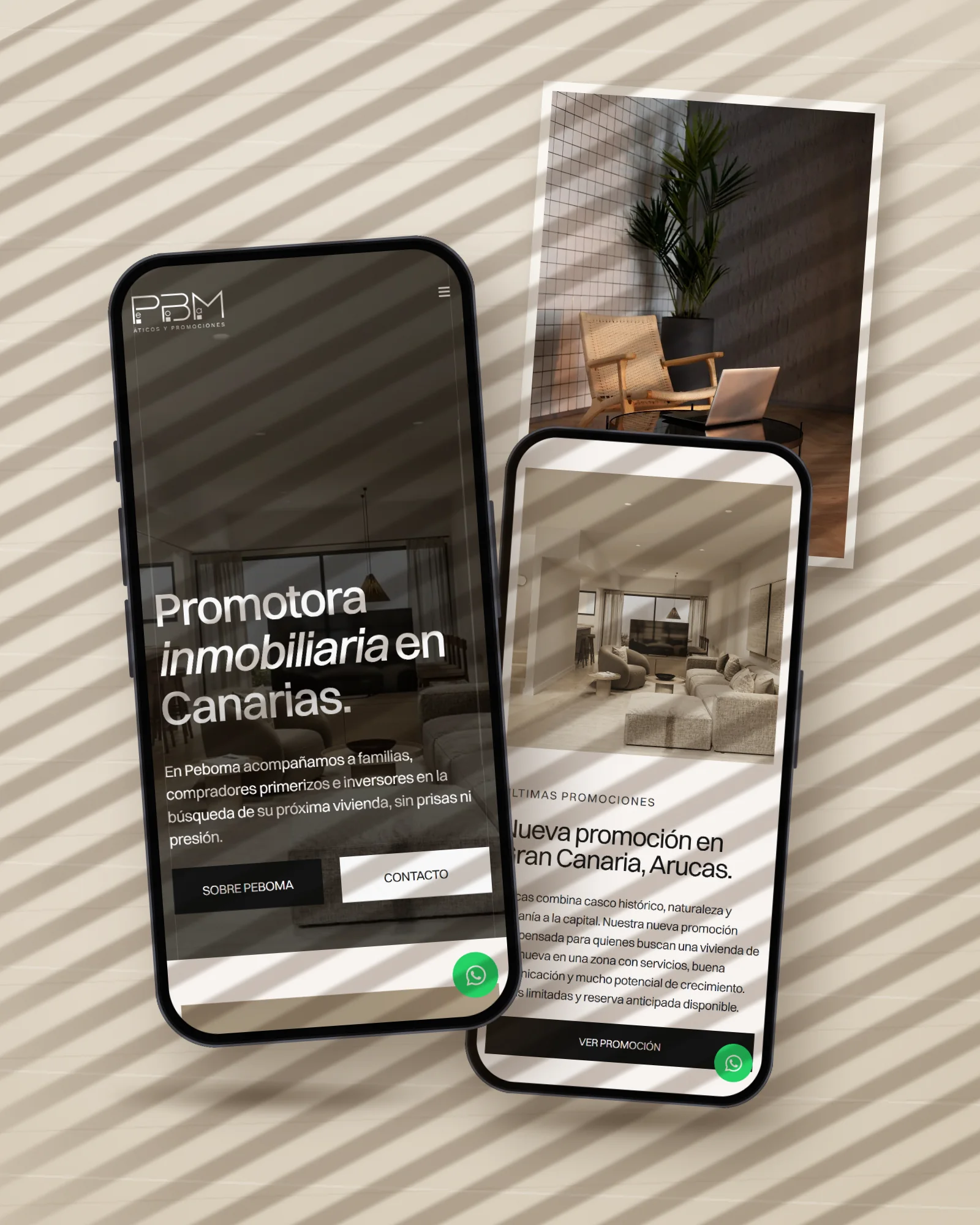
- A simple property search, with filters for area, price and number of bedrooms, that works well on mobile.
- Listings with large photos and full details: square metres, floor, orientation, energy certificate and a visible price.
- Direct contact on every listing: call and WhatsApp buttons, as well as the form.
- Sync with your CRM or the portal, so you don’t have to upload every property twice by hand.
- Several languages if you work with foreign buyers, which is very common in the south of Gran Canaria.
- Structured data. There’s a specific schema.org type for estate agents, and Google’s structured data guide for local businesses explains how to mark up address, phone and opening hours so it understands them properly.
And, as with any local business, the website and the Google profile go together. If yours still needs work, in this guide we explain how to optimise your Google Business Profile in Gran Canaria.
Mistakes we see often
- Sold properties still listed. The buyer calls, is told it’s no longer available and leaves with the worst possible impression.
- Listings without a price. “Price on request” makes many people skip straight to the next listing.
- A website that’s just a link to the portal. If the “View properties” button sends people to Idealista, the website isn’t doing anything.
- Dark photos taken on a phone. In this sector, the photo is half the sale.
- Nothing for owners. The whole website talks to buyers and there isn’t a single page for people who want to sell.
Want us to review your agency’s website?
If you run an estate agency in Gran Canaria and depend almost entirely on portals, we can look with you at what your website needs to win owners and buyers on its own. No commitment. We’re a custom web design studio in Gran Canaria: you can see how we work in web development and SEO, request a quote here or message us directly on WhatsApp (+34 613 09 41 47).